How to Level Fence Posts Like a Pro
A fence post is plumb when it stands truly vertical in every direction, not just front to back. The mistake I see most on people's first fence is checking one face and calling it done. A post can look dead straight from the front and still lean sideways a couple of degrees. On a 6-foot post, two degrees of lean puts the top about two and a half inches off, and that is enough to drag your rails visibly out of line. Check both directions at once and you catch it before the concrete goes in.
Key Takeaways
- Two degrees of lean on a 6-foot post throws the top off by about 2.5 inches, enough to pull your rails out of line.
- Check plumb in both directions at once with Surface mode, not just one face of the post.
- Set the bottom of the hole below your local frost line, or the post jacks up over winter.
- Re-check plumb after bracing and again right after you pour. Posts move when concrete goes in.
- Hold/Freeze locks the reading so you can work the braces with both hands instead of watching the screen.
Why post plumb matters more than people expect
Posts need to be plumb, not level. Level is horizontal. Plumb is vertical. The rails run level, the posts stand plumb. Get the posts wrong and the rails cannot sit level, so the panels cant and open up gaps. A post that is two degrees out looks almost straight at the base, but the top of a 6-foot post ends up about two and a half inches off. Line up several panels and you will see it.
The math behind it is not complicated. The offset at the top is the post height times the sine of the lean angle. On a 6-foot post that works out to roughly 2.5 inches at two degrees, and still over an inch at one degree. Both show up across a run. When the top rail looks like it slopes uphill or downhill across a few bays, the posts are almost always the culprit, not the rail.
Plumb matters for a second reason. Posts that lean in toward each other squeeze the fence boards. Posts that lean apart open gaps at the tops of the panels. Year after year that loading racks the panels and works the fasteners loose, and any joint under stress rots faster. A plumb fence lasts longer.
How deep should fence post holes be?
Hole depth is where post plumb starts. Set a post too shallow and it will heave, lean, and fail, especially anywhere the ground freezes. The rule is simple: bury at least a third of the total post. A 6-foot above-grade post wants a 9-foot post set 3 feet deep. In cold climates the frost line adds another rule on top of that.
Frost depth changes a lot by region. In the far south of the US the ground barely freezes, so depth is set by the one-third rule alone. Across the upper Midwest and Northeast it runs a few feet, and in the coldest parts of the northern states it can reach six feet. If the bottom of your post sits above the frost line, the ground pushes it up a little every winter. This is called frost jacking. A few winters of it and the post sits high, the concrete collar has cracked, and the post no longer stands plumb.
Frost depth rule: Set the bottom of the hole below your local frost line. Your local building department can tell you the frost depth for your area, and it is worth a phone call before you dig. Do not guess. A post set two inches above frost depth fails about as fast as one set six inches above it.
Make the hole about three times as wide as the post. A 4x4 wants a 10 to 12 inch hole. A 6x6 wants 16 to 18 inches. That collar of concrete is what holds the post against the sideways forces trying to lean it over. A narrow hole might hold a post upright on day one, but it will not stand up to years of wind and panel load.
Why you need to check both directions, not just the front
Every fence guide tells you to check plumb. Almost none of them tell you to check both directions. A bubble level held against the front of a post reads front-to-back lean only. It says nothing about side-to-side. A post can pass the front-face check and still lean a few degrees sideways, and that sideways lean is exactly what pulls your rails out of line across a run.
Surface mode on Spirit Level Pro reads both directions at once. The round bubble tracks pitch (front to back) and roll (side to side) together. When the bubble sits centered, both are at zero. That is the only check that proves a post is truly plumb. Here is how to use it on a post:
- Open Spirit Level Pro in Surface mode. You want the round vial with a 2D bubble, not the tall rectangular one from Plumb mode. Surface mode reads both directions at once, which is what a vertical post needs.
- Hold the phone flat against the post face. Put the back of the phone flat against the widest face of the post. It needs to touch the wood, not float in front of it in your hand. Otherwise you read the angle of your hand, not the post.
- Read both directions. The round bubble shows front-to-back lean and side-to-side lean at the same time. Both need to read zero for the post to be plumb. If the bubble is centered one way but off the other, the post leans sideways even though it looks straight from the front.
- Turn to the next face and check again. Rotate 90 degrees and check the adjacent face. Now you are reading the other pair of directions. On a square post the two readings should agree. This catches any twist in the post that a single face would hide.
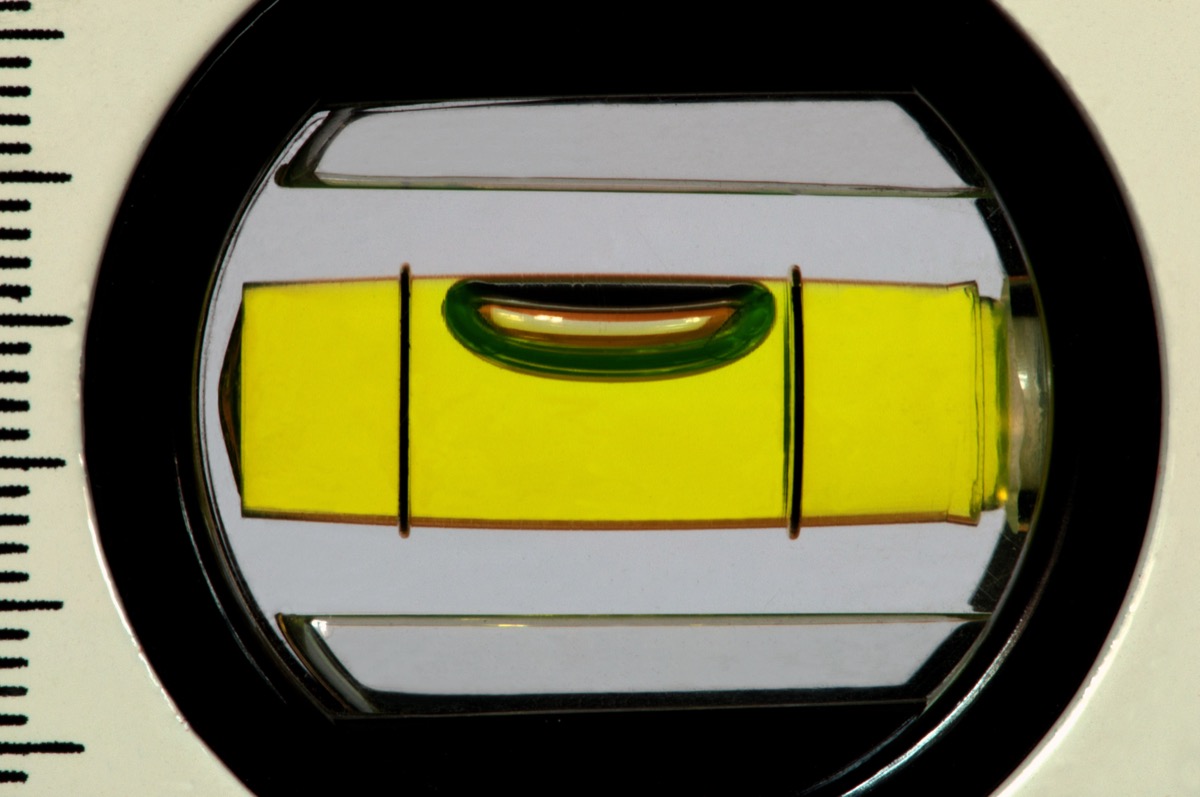
Check post plumb in both axes with Spirit Level Pro — free, no download needed.
Open Spirit Level ProWet-set or dry-set concrete for fence posts?
Both make a solid post if you do them right. The real difference is how long you have to make adjustments. Wet-set concrete, mixed with water before it goes in, gives you about a minute per post before it starts to stiffen. Dry-set concrete goes in dry around the post and then you soak it with water, which buys you closer to half an hour before it takes an initial set. Quikrete Fast-Setting is the common no-mix bag for this.
Wet-set concrete
Wet-set goes in as a mixed slurry, straight into the hole around the post. It packs in tight against the soil and the post and fills without voids. The catch is that minute of working time. Once it is in the hole you move fast, so your braces need to be up and your plumb reading confirmed before you pour, not after.
Figure roughly one 50-pound bag per post for a 4x4 in a 10-inch hole. Pour in two lifts and check plumb after each one, not just at the end. The first lift tends to shift the post and the second locks it. Go easy on the tamping. Beat on it too hard and the post walks.
Dry-set concrete
Dry-set goes in dry and gets soaked afterward, so all you need on site is a bag and a hose, no mixing. Pour the dry mix around the post, then add water slowly until it soaks through, about a gallon per bag. It firms up in twenty to forty minutes and cures over a few hours.
The long working window is the reason to use it. You can set the dry mix around a whole run of posts, do your final plumb checks, make any last tweaks, and only then go down the line adding water. Nothing sets until you wet it.
Check plumb before AND after you pour. Posts shift during the pour more than people expect. Wet concrete pushes against the post as it goes in. Check plumb straight away, while the mix is still fluid, and fix any shift before it stiffens. This one habit prevents most leaning posts.
How to brace posts plumb while the concrete sets
A post that reads plumb when you check it can still drift while you brace it, pour, and wait for the cure. The bracing has to hold the post firmly in two directions. One brace holds it in a single plane and lets it swing in the other, so use at least two braces set roughly 90 degrees apart.
- Drive two ground stakes. Set a stake about 4 feet out from the post in two directions, one along the fence line and one across it. Drive them in solid. A loose stake lets the brace flex and the post move.
- Attach 2x4 braces. Cut 2x4s to run from the post down to the stakes. Fix each to the post with a single screw for now so you can still adjust. Do not drive it home until plumb is confirmed.
- Use Hold/Freeze to lock the reading while you brace. Tap the vial once to freeze the current reading. The HOLD badge shows up. Now you can set the phone down, work the brace with both hands, and pick it back up to read the same number when you are ready. No trying to watch a screen and wrestle a brace at the same time.
- Adjust the braces until it reads plumb. Lengthen or shorten each brace at the stake end until the phone reads zero both ways. Once it does, screw the brace fully to the post.
- Check again after you fasten. Driving screws can torque the post a little. Confirm plumb one more time once the braces are tight.
How to align several posts along a fence line
Getting each post plumb is not the whole job. Posts that are each plumb on their own can still sit out of line with each other along the run. Alignment is a separate check from plumb, and you do it a different way.
The string line method
Set the two end posts first and bring them fully plumb. Stretch a taut string between them at the same height on each, usually near the top. Every post in between should just touch the string along its front face. A post set back off the string, even a plumb one, puts a kink in the line that shows up from a distance.
Here is the catch nobody mentions: the string only works if both end posts are plumb and at the same height. I have walked runs where the string was tight and every post touched it, but one end post was leaning, so the whole string was running along a crooked reference. Everything lined up to a bad line. Get the end posts right first. Do not trust a string tied to a leaning post.
Keeping post tops at the same height
On flat ground the post tops should all sit at the same height. Lay a long straight board across two adjacent posts and read it with the phone. It should read level. On a slope, decide first whether the fence follows the ground (each post the same height above grade) or keeps a level top rail (each post cut different). Either works, but pick one before you set anything.
Checking the posts do not twist
A post can be plumb and still be turned a few degrees on its axis, so its wide face is not square to the fence line. Then the boards attach at a slight angle and it looks off. Check the face against the string before you pour. Every post face should run parallel to the string, which confirms alignment and orientation together.
What if a post is out of plumb before the concrete cures?
Wet concrete gives you a window. Right after the pour it is fully fluid and you can move the post by hand, adjusting the braces to match. Around ten to fifteen minutes in, it thickens to about the feel of yogurt, still movable but you have to lean on it. By thirty minutes most mixes are too stiff to shift without cracking the collar.
The post usually drifts in the first few minutes after the pour. The weight of the concrete and the disturbance of pouring nudges it. So check plumb within a couple of minutes of finishing each post, not at the end of the day when it has all gone hard.
The correction window by concrete type
Wet-set gives you a minute or two of full fluidity, and you can still push it with effort out to five or eight minutes. Dry-set stays easy to correct for twenty to forty minutes after you water it in, then firms up around the hour mark. Plain bag mix that is not fast-setting gives you fifteen or twenty minutes. These are rough. Heat, humidity, and how much water you used all move the number. Hot days set faster. Cold days below 40°F drag it out.
If the concrete has already started to set
A post that has drifted in setting concrete is harder to save. You have three options. Dig it out and reset it, which gives the best result. Break out the collar with a rotary hammer and reset, which works within the first day or so. Or leave the lean and add a metal straightener bracket at grade, which is a patch rather than a real fix. On a fence where the lean will show, digging out and resetting is the only one that looks right in the end.
Frequently asked questions
How do you check if a fence post is plumb?
Hold your phone flat against the post face in Surface mode. Surface mode reads front-to-back and side-to-side lean at the same time. The round bubble has to sit centered for the post to be plumb. Check one face only and you miss sideways lean, which is the more common problem and the harder one to spot by eye.
How deep should fence post holes be?
At least a third of the total post length below grade. A 6-foot above-ground post needs a 3-foot hole, so a 9-foot post. Where the ground freezes, take the bottom of the hole below your local frost line, which your building department can tell you. Shallow posts jack out of line over winter.
Should I use wet-set or dry-set concrete for fence posts?
Both work. Wet-set gives you about a minute to adjust. Dry-set gives you twenty to forty minutes after you water it in, with no mixing. Dry-set suits beginners and anyone setting a run of posts in one go, because the longer window lets you check and re-check each post before the concrete locks up.
What happens if fence posts are not plumb?
The rails slope instead of running level. Two degrees of lean on a 6-foot post puts the top about 2.5 inches off, which shows across a run of panels. Posts leaning in compress the boards. Posts leaning apart open gaps at the panel tops. Over time the fence racks, the fasteners work loose, and it wears out faster.