How to Slope a Deck for Proper Water Drainage
A deck needs a slope of about 1/8" to 1/4" per foot, roughly 0.6° to 1.2°, so water runs off instead of sitting there. Get it wrong and two things happen. Water pools and rots the boards, and the deck can fail inspection where the building code is enforced. You can measure the slope, build it in, and check it with your phone.
Key Takeaways
- The building code minimum is 1/4" per foot (1.19°, 2.08%) for decks with a solid or waterproof surface. That is the 2% rule you hear on job sites.
- Standing water rots wood, even pressure-treated lumber. The ledger where the deck meets the house is the first thing to go.
- Composite decking needs slope too. It will not rot, but it grows algae and gets slippery where water sits.
- Set 1.15° as your Target Angle and the app tells you how far off you are while you shim.
- A dated journal photo of the reading is usually enough to satisfy an inspector.
Why deck slope matters
Standing water rots a deck from underneath. Wood starts to decay once it stays wet, and pressure-treated lumber is not exempt. The exposed top of a deck board takes the brunt of it. The worst spot is the ledger board where the deck bolts to the house, because water that sits there wicks straight into the house framing. That is the one place a rot problem turns into a structural problem.
Composite and PVC decking does not rot, but standing water is still a problem. Trex, TimberTech, and Fiberon all call for 1/4" per foot minimum in their install guides. Water that sits grows algae and mold on the surface, and a green composite deck is slick underfoot. That is a safety issue, not just a looks issue.
The code is clear on this. A solid or membrane deck surface has to slope a minimum of 1/4 inch per foot, 2.08%, away from the house. Inspectors in code-enforced areas will reject a deck that does not meet it. Fixing slope after the deck is finished costs a lot more than building it in from the start.

How much slope you need, by deck material
How much slope you need depends on the decking and whether the surface is solid or gapped. A solid or waterproof surface needs more slope, because the only way off is over the edge. Gapped wood decking drains through the gaps between boards, so the code allows a lower minimum for it.
| Decking Material | Minimum Slope | Recommended Slope | Degrees |
|---|---|---|---|
| Pressure-treated lumber (gapped) | 1/8" per foot (1.04%) | 1/4" per foot (2.08%) | 0.60° min / 1.19° rec |
| Composite / PVC decking | 1/4" per foot (2.08%) | 1/4" per foot (2.08%) | 1.19° |
| IPE / hardwood (gapped) | 1/8" per foot (1.04%) | 1/4" per foot (2.08%) | 0.60° min / 1.19° rec |
| Waterproof membrane / tile | 1/4" per foot (2.08%) | 3/8" per foot (3.12%) | 1.19° min / 1.79° rec |
The 1/4" per foot figure is the same number in a few units: 2.08% slope, 20.8 mm/m, and 1.19°. Spirit Level Pro shows any of them. Tap the unit chip in the tolerance row to cycle through degrees, %, mm/m, in/ft, and ratio.
Three ways to build slope into a deck frame
You can build slope in three ways during construction. The right one depends on whether you are framing new, adjusting before the concrete sets, or working with a frame that is already up.
Method 1: set the outer beam lower than the ledger
This is the usual way on a new build. The ledger bolts to the house at a fixed height. The outer beam sits on posts, and the post height sets the slope. For 1/4" per foot on a 12-foot-wide deck, the outer beam sits 3 inches lower than the ledger. The math is simple: deck width in feet times 0.25 inches gives you the total drop.
Set the post heights during layout, before you pour the footings. Cutting a post to height on the ground beats fighting one that is already set in concrete. Check the slope with a straight board and your phone as you go: after the posts, after the beam, and after the joists.
Method 2: adjustable post bases
Sleeve-and-screw adjustable post bases let you tune the post height after the concrete cures. Simpson Strong-Tie and others make bases with 1" to 3" of travel. Good for dialing in the slope once the frame is up, and the best option for fixing an old deck whose posts are already in concrete.
Method 3: tapered sister joists
For a small correction on a frame that is already built, rip a taper into sister joists and bolt them alongside the existing ones. A 12-foot joist ripped at 1/4" per foot runs full depth at the ledger and 3 inches shallower at the outer end. It is slow work, but it leaves the posts and footings alone.
How to measure your deck's current slope
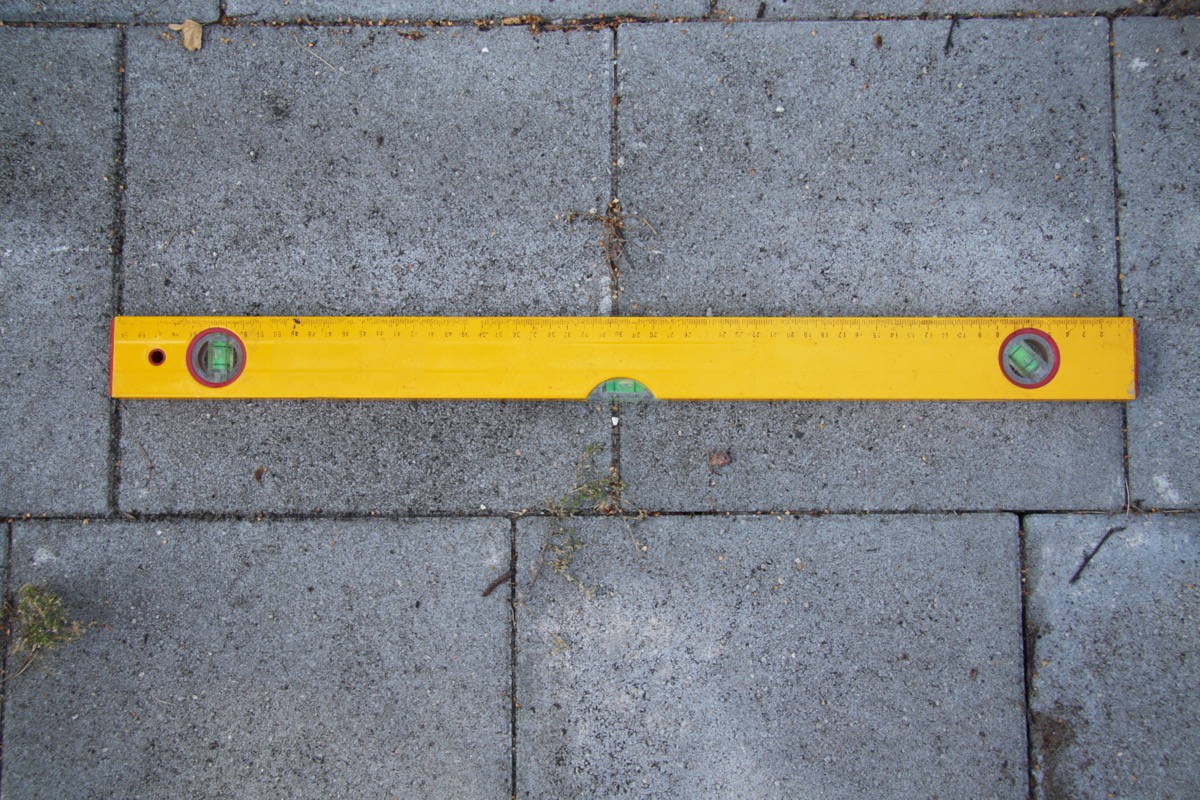
Measuring the slope takes about 10 minutes and gives you a reading in the units your code uses. A phone laid on one bare board reads only that board, and a board that is cupped or crowned throws the reading off. Lay a straight 6-foot board across several deck boards and set the phone on that. It averages out the variation between boards.
- Set the slope unit. Open Spirit Level Pro and tap the unit chip in the tolerance row. Cycle to % or mm/m, the units drainage specs and codes use. A reading of 2.08% or 20.8 mm/m means you are right on the 1/4" per foot minimum.
- Grab a straight 6-foot board. A straight 2x4 or a long level works. The board bridges several deck boards so their cups and crowns do not skew the reading. Lay it perpendicular to the house, running from the house side out to the edge.
- Set your phone on the board. Lay the phone flat and give the reading 2 seconds to settle. Read the slope. If it keeps jumping, tap Hold/Freeze to lock the display once it is steady.
- Check three spots across the width. Read the left third, the center, and the right third. Matching numbers mean the slope is even. If they vary by more than 0.5%, the frame has twist or a joist sitting at the wrong height, and that needs fixing.
- Save the readings to the journal. Photograph each one with the board in shot. Save it under a project name like "Back Deck 2026." The records help at inspection and when you plan future work on the deck.
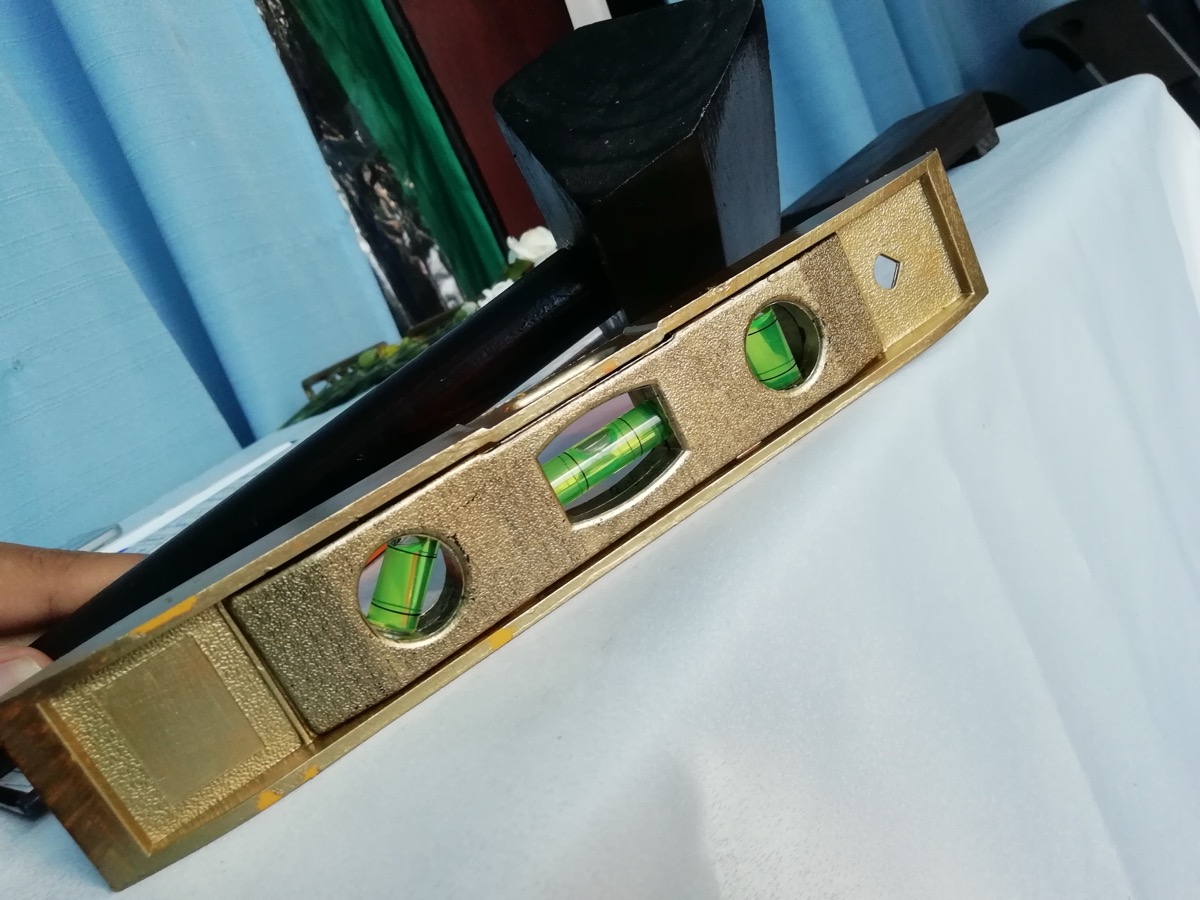
Measure your deck slope now with Spirit Level Pro — free, no download needed.
Open Spirit Level ProUsing Target Angle to hit 1/4" per foot during construction
The Target Angle feature is made for this. Instead of reading how far you are from level, it reads how far you are from any angle you set. Set the target to 1.15°, which is 1/4" per foot slope, and the app shows how far the joist or beam is off that target. You are aiming for zero off the target, not zero off horizontal.
Setting Target Angle for deck slope: In Spirit Level Pro, tap the target angle row below the tolerance row, enter 1.15, and confirm. The bubble now centers when the surface sits at 1.15°, a 1/4" per foot drainage slope. The audio beeps faster as you get close and goes to a steady tone when you hit it. So you can shim with both hands and listen instead of watching the screen.
The trick with shimming is that you never have a free hand for the phone. With the audio on, you do not need one. Set the board across the joists, add or pull a shim, and listen for the tone to go steady. You are not stopping to check the screen after every move, which is where the time goes when you do it by eye and tape.
The audio zones scale to the target. Sit 4x the tolerance off the 1.15° target and the beep is slow. Get inside the tolerance and the tone goes steady. Switch to the Finish tolerance preset (±0.3°) for this. It keeps the good band tight enough to matter without tripping on a bit of board flex.
How to fix a deck that already pools water
A deck that ponds has one of three problems. The frame was built flat, or slopes back toward the house. Individual boards are cupped and holding water in low spots. Or the outer posts have settled. Measure the slope first, using the steps above. That tells you whether you are dealing with a frame problem or a board problem.
Shimming existing joists
If the slope is too shallow but still runs the right way, tapered shims between the joists and the outer beam add slope without replacing anything. Composite shims or ripped pressure-treated lumber both work. Add shims at the house end of each joist to lift the house side relative to the outer beam. Check the slope with the phone after each one.
Adjustable post bases
If the outer posts are set in concrete and the slope is well off, adjustable post bases are the cleanest fix. Lower the outer bases by the drop you need. A 12-foot deck that wants 3" of drop means lowering each outer base by 3". That shifts the slope evenly across the frame. Recheck the joists for level across the width afterward so you have not put a twist in.
Replacing cupped or crowned boards
A cupped board holds water in a low spot even when the frame slopes right. A board that cups face-up works like a little gutter. Replace it, or flip it crown-up if it is screwed down and the wood is still sound enough to refasten. Composite boards do not cup, but they can warp, and there the fix is replacement.
Sistering joists
For a bigger correction without touching the posts, sister new tapered joists alongside the old ones. The new joists carry the deck boards and set the right slope. The originals stay for structure. It is more work, but it is the soundest option when the framing is good and just sitting at the wrong angle.
Which way should a deck slope?
Always slope away from the house. This one is not up for debate. The ledger board and the house framing behind it are the parts you least want wet. Sloping away from the house sends the water to the outer edge, where it drops to grade and does no harm.
There is a second question most guides skip: where the water goes once it reaches the edge. A deck that sheds correctly but dumps onto a neighbor's fence, a concrete path, or the plantings against the foundation just moves the problem. Look at what sits below the outer edge before you commit to a direction. A scupper or a small gutter along the outer rim joist sends the runoff where you want it.
On a wide deck, over 16 feet, think about a dual slope. Run each half toward a drain channel down the middle instead of tipping the whole surface toward one edge. That cuts the total height difference, which you start to feel underfoot on a very wide deck sloped one way.
What inspectors check for deck drainage
An inspector looking at deck drainage checks two things: which way it slopes (away from the house) and how much (the 1/4" per foot minimum on a solid surface). Most bring a level and a tape on the day. Measurements you took during the build still help if anything is in question.
A journal of dated photos taken during framing carries weight. Each photo shows the reading, the date, and the stage the frame was at. Those are hard to fake after the fact, and an inspector who sees them usually does not need to re-measure everything on site.
What an inspector checks for drainage:
- Slope direction. Water drains away from the house, not toward it. Some inspectors pour a little water on the surface to see which way it runs.
- Slope amount. At least 1/4" per foot on a solid surface. Some accept photos from the build, others measure on site.
- Ledger flashing. Flashing above and behind the ledger board keeps water out of the house connection. Separate from slope, but tied to the same failure.
- Gap spacing. On gapped wood decking, the gap between boards (about 1/8" to 1/4") lets water drain through the surface.
Save your journal entries under a project name that matches your permit number. Export the project as a PDF from the journal screen. You get a print-ready document with the readings, GPS tags, and photos. Hand it to the inspector at the final walk-through.
Frequently asked questions
How much slope does a deck need for drainage?
The minimum is 1/4" per foot on a solid or membrane surface. That is 2.08%, 20.8 mm/m, or 1.19° in other units. On gapped pressure-treated or hardwood decking, 1/8" per foot is widely accepted since water drains through the gaps. Most builders just use 1/4" per foot on everything to keep it simple.
Does composite decking need to slope for drainage?
Yes. Trex, TimberTech, and Fiberon all call for 1/4" per foot minimum (1.19°) in their install guides. Composite does not rot, but water that sits grows algae and mold on the surface, and that gets slippery.
My deck is level. Do I need to rebuild the whole frame?
Usually not. Adjustable post bases can lower the outer beam after the fact and add slope without a rebuild. For a small correction, sistering tapered joists alongside the old ones fixes the slope without touching the posts or footings. Measure the current slope first. You may need less than you think.
Which way should a deck slope for drainage?
Always away from the house, with the outer edge as the low point. Slope it toward the house and you run water straight at the ledger and foundation, the worst places for it. If the edge drains somewhere you would rather it did not, add a scupper or a small gutter at the outer rim joist to send it elsewhere.