Spirit Level vs Laser Level vs Digital Level: Full Comparison
These three tools solve different problems. A spirit level tells you whether one surface is level right now. A laser level throws a reference line across a room so you can line up several points at the same height. A digital level shows the angle as a number. Most people doing work at home need one or two of them, not all three. Here is how to work out which ones are worth your money.
- A bubble spirit level is cheap, has no battery, and reads to a fraction of a degree. It is enough for most jobs around the house.
- A laser level costs more but earns its keep when you need to line up several points across a large space.
- A digital level shows the angle and the slope as a number, which helps with drainage work and set pitches.
- A calibrated phone app matches most bubble levels for accuracy and can log measurements. It is a good place to start before you buy hardware.
- For shimming one cabinet, a phone wins. For tiling twelve feet of backsplash, a laser wins.
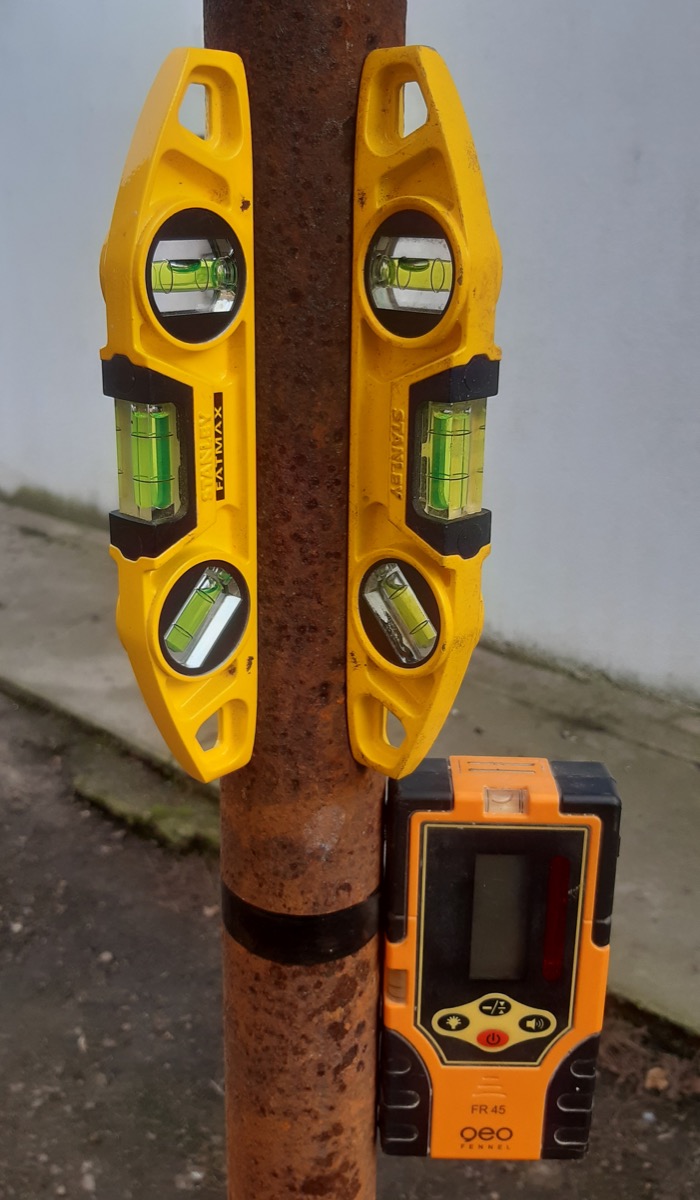
How does each type of level work?
Each tool finds level in a different way, and that difference is what sets its price, its accuracy, and the jobs it suits. Once you see how each one works, the choice usually makes itself.
Bubble spirit level
A spirit level uses a sealed vial with coloured liquid in it and a small air bubble. The bubble rises to the high point of the curved vial. When the surface is level, the bubble sits centred between two lines. How well it reads comes down to how the vial is set in the tool and how carefully you look at the bubble. A good torpedo level reads to about half a millimetre per metre, which is roughly a hundredth of a degree. That is plenty for anything you hang or frame at home.
Laser level
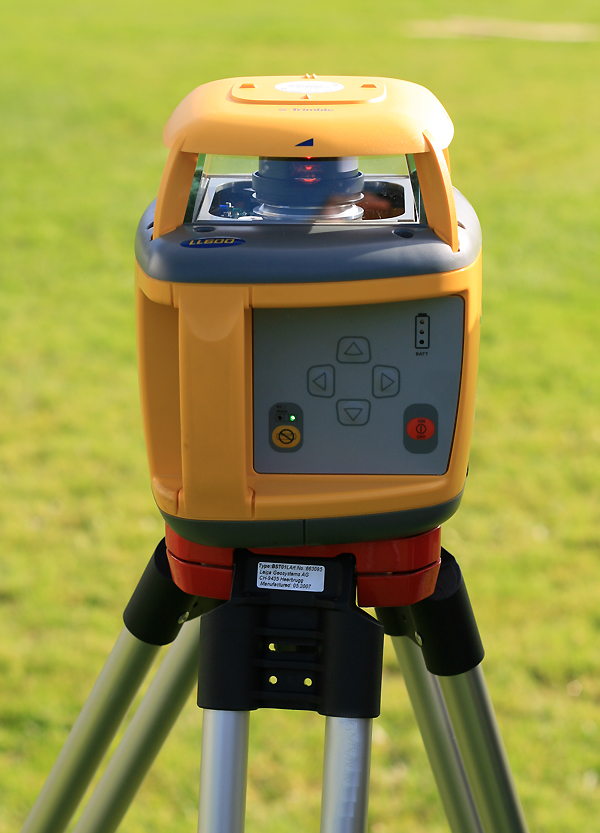
A laser level shines one or more beams onto the walls. Self-leveling models use a swinging pendulum or a small motor to find level on their own before the beam appears. A cross-line laser puts out a horizontal and a vertical line at the same time. A rotary laser spins the beam through a full circle to mark a level plane around the whole room. Over a room-sized distance the beam stays accurate to a small fraction of a degree.
Digital level
A digital level swaps the vial for an electronic sensor. It is the same kind of accelerometer that sits inside a phone, but it is fixed in a solid, calibrated body. The angle shows on a small screen. Good ones read to about a twentieth of a degree and can show the result in degrees, percent slope, or millimetres per metre. They cost more than a bubble level and are most useful when your target is not flat, for example a 2° fall on a drain.
Phone spirit level app
A phone app reads the same kind of sensor as a digital level and shows it on your screen. Once you calibrate it, a good phone reads to within a couple of tenths of a degree. A cheaper phone reads a little coarser. The upside is that you already carry it, and a good app adds things a hardware tool cannot, such as logging measurements and giving you audio guidance. The downside is that a phone is not waterproof, it runs on battery, and it does not feel as natural as grabbing a solid tool in the middle of a job.
Head-to-head comparison
The table below sets all four tools side by side on the things that decide a purchase. The price ranges are rough US retail tiers. The accuracy figures are what you can expect in normal use, not the best-case number on the box.
| Feature | Bubble Spirit Level | Laser Level | Digital Level | Phone App |
|---|---|---|---|---|
| Cost | $5-$30 (torpedo) $15-$80 (box level) |
$30-$300 (cross-line) $200-$2,000 (rotary) |
$40-$200 | Free (you own the phone) |
| Accuracy | ±0.5mm/m (~±0.03°) | ±1/8" per 30ft (~±0.02°) | ±0.05° | ±0.1-0.3° calibrated |
| Range | Contact only | Up to 100ft (laser) Up to 1,000ft (rotary+detector) |
Contact only | Contact only |
| Hands-free use | No | Yes (tripod mount) | No | Partial (prop or hold) |
| Works outdoors in daylight | Yes | Limited (needs detector) | Yes | Yes |
| Weather resistance | Generally yes | Varies (IP54-IP65 on quality models) | Varies | No (not IP-rated) |
| Battery required | No | Yes (AA or lithium) | Yes (button cell) | Yes (phone battery) |
| Data logging | No | No (most models) | No (most models) | Yes (Pro feature) |
| Plumb detection | Yes (vial) | Yes (vertical line) | Yes | Yes (plumb mode) |
| Slope % display | No | No | Yes | Yes (Pro feature) |
| Setup time | None | 1-3 minutes | None | None |
Spirit Level Pro adds calibration, tolerance presets, slope display in several units, and a measurement journal. It is free to use right now.
Open Spirit Level ProWhen is a spirit level the right tool?
A bubble level is fast and simple. Pick it up, set it down, read the bubble. No battery, no setup, no calibration step. A good 24-inch box level from a name like Stanley or Stabila costs around $20 to $40 and is accurate enough for framing, rough carpentry, and fitting appliances.
Where the bubble level really wins is on a rough site. Drop it in the mud, wipe it off, keep going. There is no screen to protect and no glass to crack. If the tool is going to take a beating, a cheap physical level is the sensible choice.
Its limits are just as plain. It cannot throw a line across a room, and it cannot read out the angle as a number. It will not tell you when you have hit exactly 2° for a drain. For those jobs you need a different tool. But for a quick surface check, some rough framing, or a fast hang, nothing beats a plain bubble level.
When is a laser level the right tool?
A self-leveling cross-line laser is the tool to reach for when you need a level line across a whole room. Nothing else does this well. Hanging a row of pictures at the same height, running a backsplash course across twelve feet, fitting chair rail around a dining room, putting up a drop ceiling: the laser lays down one line that every piece lines up to.
A kitchen backsplash makes the point. Say you are running subway tiles up from the counter across twelve feet. With a phone or a bubble level you check each tile on its own, which works, but small errors stack up over that distance. Set a cross-line laser at tile height and every course snaps to the same line. On a job like that the laser earns its cost in an afternoon.
The trade-offs are real. Most consumer lasers wash out in bright sun, so outdoors or in a bright room you need a detector, which costs extra. Setup takes a minute or two, and most jobs want a tripod. The beam shows you where level is, but it does not tell you the angle of a surface you already have. For that you still need a bubble level or digital level next to it.
When is a digital level the right tool?
A digital level covers one clear gap. It gives you a precise angle as a number, in a tool that is ready the moment you pick it up and does not lean on your phone. Good ones from names like Bosch, Stabila, or Johnson Level read to about a twentieth of a degree, show slope in degrees, percent, or millimetres per metre, and sit in a solid body meant for daily trade use.
It fits best in trade work where you take the same kind of angle reading again and again. Setting the fall on a shower tray, checking rafter angles, or setting solar panels to a fixed pitch all want a number, not a bubble. The tough housing shrugs off site knocks better than a phone, and the buttons work fine with dirty hands where a touchscreen does not.
The catch is cost against what you really need. A digital level costs more than a phone app and in some ways does less. There is no logging, no audio guidance, no location tag. If you already use your phone to document jobs, a phone app covers the same measurement and fits the way you already work.
When does a phone spirit level app win?
A phone app beats a physical tool on two counts: it is always with you, and it can keep a record. You never leave your phone at the shop. For a quick check, like whether a washing machine sits flat or a shelf is close enough, reaching for your phone is faster than hunting down any tool. Once calibrated, it holds its own against most bubble levels.
The record-keeping is where it pulls ahead for pros. An app like Spirit Level Pro logs each measurement to a project journal, saves the location, attaches a photo, and exports to CSV or PDF. A cheap torpedo level does none of that. If you need to show a client that the floors were checked and shimmed before the cabinets went in, the phone is the only tool that leaves a trail.
Its weak spots are honest ones. A phone is not waterproof, it runs on battery, and it does not always sit as nicely in the hand as a proper tool. If you are pressing hard against a surface over and over, a physical tool feels better. But for accuracy and for keeping a record, the phone is better than most people give it credit for.
Which should you buy? A decision matrix
Most people do not need all four tools. What you should own depends on the work you actually do. The table below gives a straight recommendation for each kind of user. Start with the phone app either way. It is free and does more than most people expect.
Recommended Kit by Use Case
The most common buying mistake is getting a laser level before the work calls for one. The laser only pays off when you need a line across space. If your usual job is checking one surface at a time, a phone app and a cheap bubble level cover it. Hold off on the laser until you are regularly hanging things at the same height across a room, or running tile in stretches longer than about six feet.
Frequently asked questions
Is a laser level more accurate than a spirit level?
Over a short distance they are about the same. A good bubble level and a self-leveling laser both hold accuracy to a small fraction of a degree in good conditions. The laser's real edge is range. It throws a line across a whole room and lets you line up several points at once. For checking one surface, a bubble level or phone app is just as accurate and quicker to set up.
Can a phone replace a laser level?
For some jobs, yes. Shimming a cabinet, checking a shelf, or seeing whether an appliance sits flat is faster with a phone app than with a laser you have to set up. Where the phone cannot stand in for a laser is any job that needs a line thrown across a space, such as hanging a row of pictures at the same height, running backsplash tile over twelve feet, or fitting chair rail around a room. Those need a projected line, and a phone cannot make one.
What is the most accurate level you can buy for home use?
Among consumer tools, a good digital level is the most accurate you can get for a sensible price, reading to about a twentieth of a degree. Precision machinist levels do better still but cost far more and suit workshop work, not walls. A calibrated phone app reads to within a couple of tenths of a degree, which beats most bubble levels read by eye. If you need certified accuracy for a record, that is survey-instrument territory, not a home tool.
Do I need a laser level for tiling?
It depends on how much tile. For a single wall of four to six feet, a bubble level or phone app is fine. For runs of twelve feet or more, such as a full backsplash, a shower, or floor-to-ceiling tile, a self-leveling cross-line laser saves time and keeps lippage down. It lays one line that every course checks against. A basic cross-line laser is not expensive and handles this well.
The bottom line
No single tool wins everywhere. A bubble level is hard to beat for rough site work. A laser level owns anything that needs lining up across a room. A digital level suits trades that read a precise angle all day. A phone app covers everyday use, keeps a record, and holds up well on accuracy once you calibrate it.
For most people the answer is simple. Start with the phone app, which is free. Add a 24-inch bubble level for around $20. Buy a cross-line laser only when a real job makes the need clear. That small kit handles most of the work you will meet around a house. The laser and the digital level are tools you grow into, not ones to buy on the hunch you might need them one day.