What Is a Spirit Level? History, Types, and How They Work
A spirit level is a tool that uses a small air bubble in a sealed, liquid-filled vial to show whether a surface is horizontal (level) or vertical (plumb). On a level surface, gravity centers the bubble between two marks on the vial. The "spirit" in the name is the alcohol used as the liquid. It has nothing to do with anything supernatural.
Key Takeaways
- The spirit level was invented by the French writer Melchisédech Thévenot in the 1660s.
- The bubble rises to the top of the curved vial because air is lighter than the liquid around it. On a level surface, the top of the curve is the center.
- A good construction level reads level to about 0.5mm per meter, which is roughly 0.03°.
- A calibrated phone accelerometer reads to within about 0.1° to 0.3°, close to a mid-range professional level.
- The liquid is usually ethanol or isoamyl acetate, dyed yellow-green so the bubble is easy to see.
A brief history of the spirit level
Melchisédech Thévenot invented the spirit level in the 1660s. He was a French writer and book collector, better known for his work on travel and geography than for tools. He saw that a sealed vial of liquid with an air bubble would always push the bubble to the highest point. That gave a steady horizontal reference, without the swing of a plumb line.
Why alcohol replaced water
Water was the obvious first choice, and earlier builders had used water-filled troughs as rough horizontal references. But water has two problems. It freezes, so the tool stops working in winter. And it clings to the glass unevenly, so the bubble sticks and jumps instead of sliding. Alcohol (the "spirit") does not freeze at normal outdoor temperatures, it flows cleanly, and it wets the glass evenly. That is why it won out.
From Thévenot to the building site
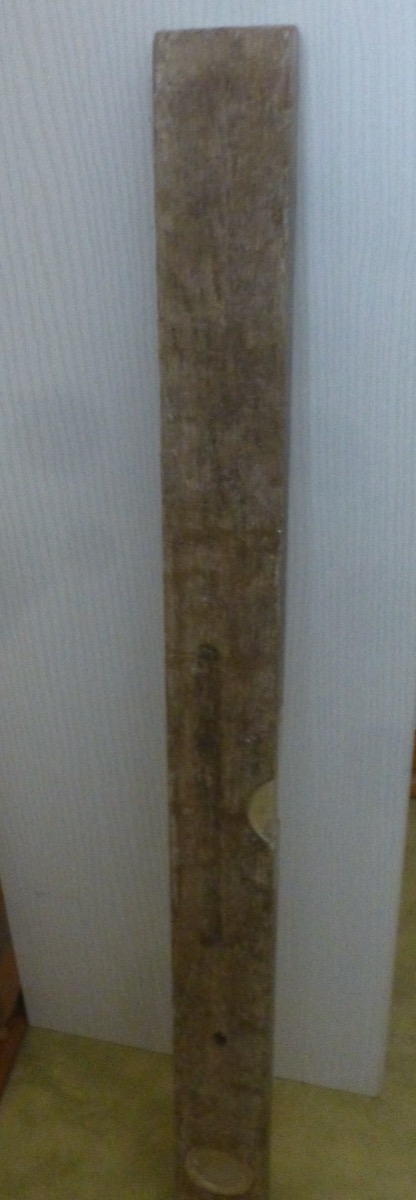
Surveyors and instrument makers picked up the spirit level over the next century. Telescope makers used it to level their mounts. Surveyors found it easier to carry than a water trough and steadier than a plumb line for horizontal work. Cheap, repeatable glass vials arrived with industrial manufacturing in the 1800s. The 20th century added aluminum box beams and the small torpedo level that most tradespeople carry today.
How does a spirit level work?
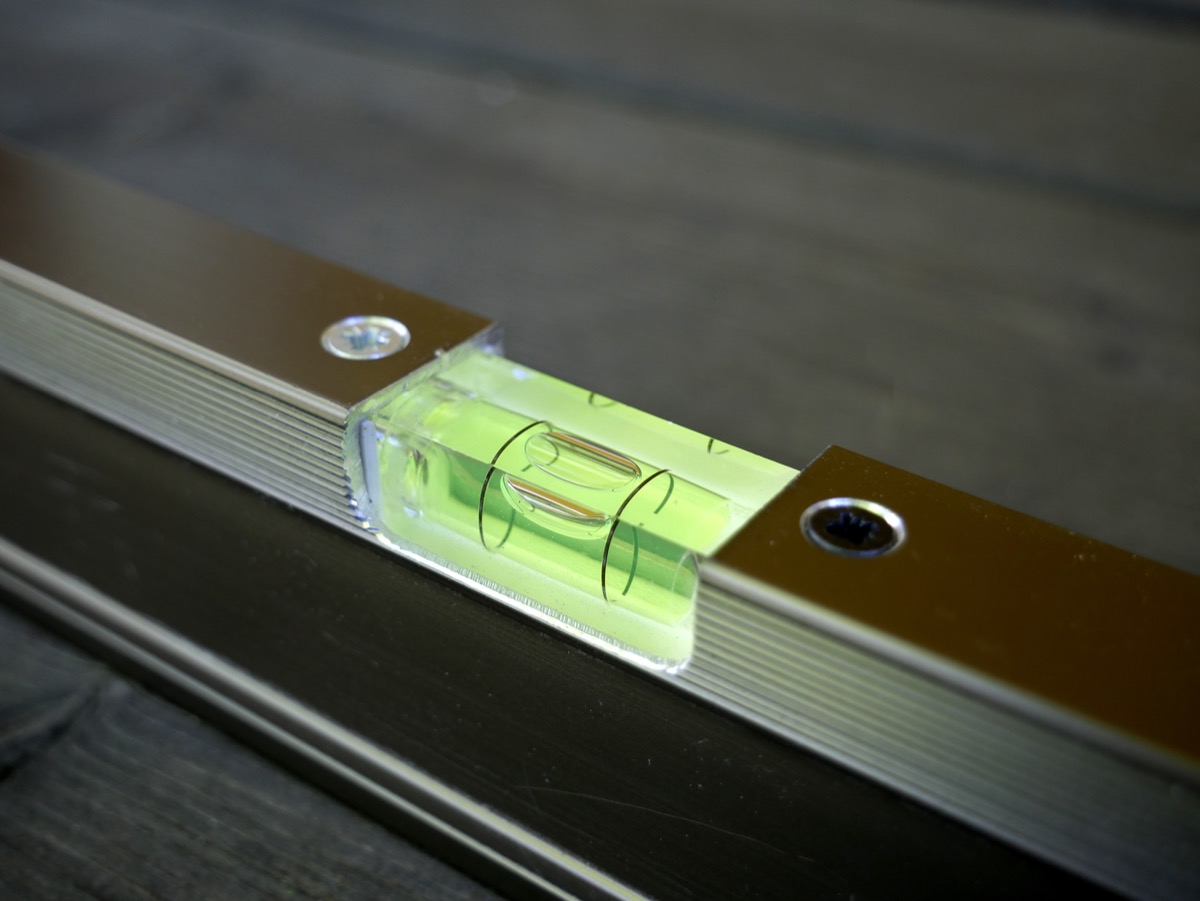
The vial does all the work. It is a sealed glass or acrylic tube, curved slightly, filled with a thin liquid (ethanol or isoamyl acetate) and one air bubble. The air is lighter than the liquid, so gravity pulls the liquid down and the bubble rises to the highest point in the vial. On a level surface, that highest point is the top of the curve, which is marked with two lines. The bubble sits between them.
The role of the vial curve
The curve sets the sensitivity. A tighter curve (a smaller radius) moves the bubble farther for the same tilt, so it shows small errors more clearly. A gentler curve moves the bubble less, which is more forgiving on a rough surface but harder to read finely.
A vial with a curve radius of about 1 meter moves the bubble roughly 2mm per meter of tilt. Good construction levels use a tighter curve that gives about 0.5mm per meter. Precision surveying levels use radii of 10 meters or more, down to about 0.02mm per meter.
What the liquid actually does
The liquid has to do several things at once. It must be thin so the bubble moves fast. It must stay liquid below freezing. It must hold the bubble in one round shape. And it must wet the glass evenly so the bubble slides instead of sticking. Ethanol does all four. It freezes at about -114°C, far below any job site. Isoamyl acetate (banana oil) turns up in some warm-climate tools for its longer shelf life.
The yellow-green color is just dye. A clear liquid on clear glass makes the bubble hard to see in bright light.
What types of spirit levels are there?
Spirit levels come in more shapes than most people expect, and each one suits a different job. Inside, they all work the same way, with a curved vial and an air bubble. What changes is the size and shape, and that decides where you can use it.
| Type | Typical Length | Primary Use |
|---|---|---|
| Torpedo level | 9 inches | Plumbing, tight spaces, one-handed use |
| Standard box beam | 24-48 inches | Cabinets, shelves, door frames, general construction |
| Construction level | 4-6 feet | Framing, setting posts, long runs |
| Line level | 2-3 inches | Hooks onto a string line for long horizontal runs |
| Post level | Variable | Clips to a post to check plumb on two axes at once |
| Magnetic level | 24-48 inches | Metal surfaces, ductwork, steel studs |
| Digital level | 24-48 inches | Reads angle to 0.1°, sets target angles, logs readings |
| Smartphone level | N/A (your phone) | All-purpose, always available, audio feedback, data logging |
Choosing the right type for the job
Length matters more than most buyers think. Put a 9-inch torpedo level on a 6-foot run of cabinets and it only reads that 9-inch span, not the whole run. A slow bow across the middle can slip past you. Use the longest level that fits the job. A 48-inch level on kitchen cabinets catches high spots that a 24-inch level walks right over.
How do you read a spirit level?
Reading a spirit level comes down to where your eye is. The two lines on the vial are the target, and the bubble has to sit between them. Look at the vial straight on. Read it from even 15 degrees to the side and parallax shifts the bubble in your eye when it has not actually moved. That is the mistake I see most on site.
The two vials on a standard level
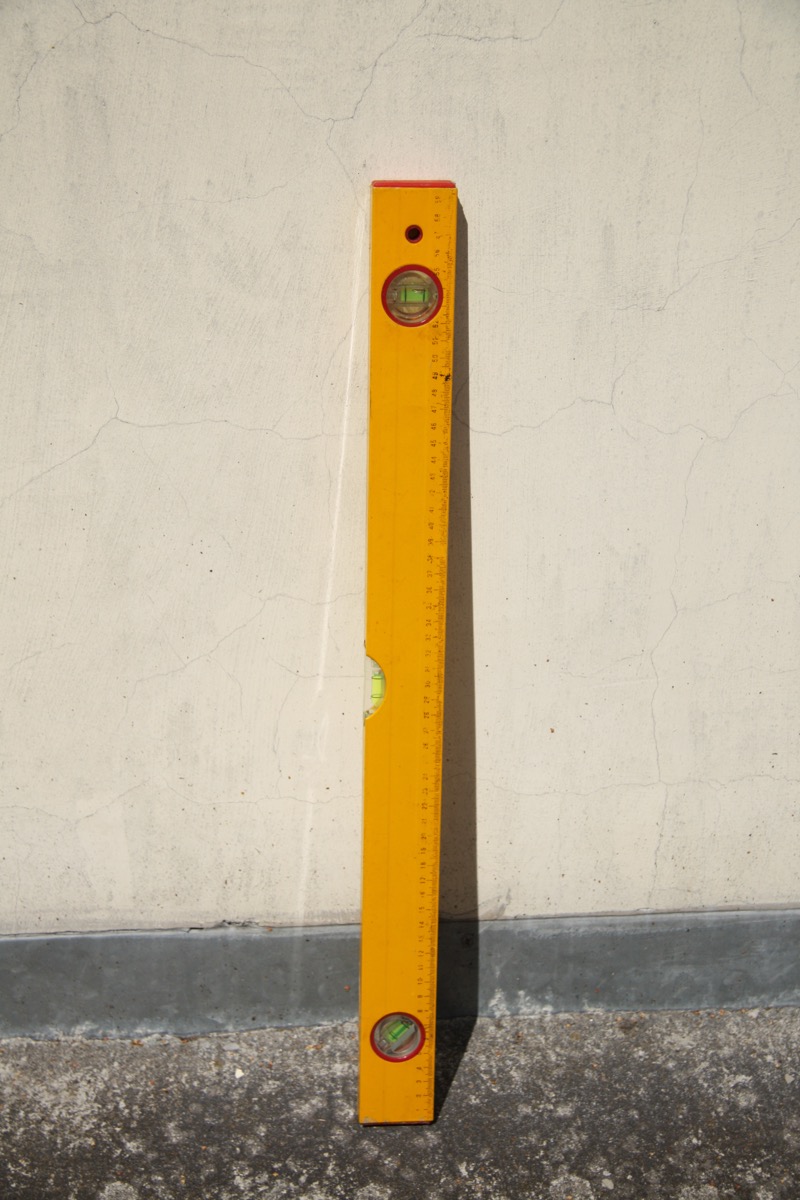
Most levels 24 inches and up have two vials. One is horizontal, to check level. The other sits at 90 degrees, to check plumb. The horizontal vial reads center when the edge of the level is flat and level. The vertical vial reads center when the edge is plumb. Some levels add a 45-degree vial too.
What the marks actually mean
The two lines are not exactly "0 degrees." They mark the good-enough zone. If the bubble touches a line rather than sitting dead center, the surface is level to within the vial's rating. On a 0.5mm/m vial, touching a line means you are within 0.5mm per meter. Dead center is tighter, closer to 0.1mm per meter on a good vial.
Why does the bubble always center in the middle?
The physics is the same as a ball rolling to the bottom of a bowl, just upside down. The air bubble is lighter than the liquid around it, so it rises to the highest point it can reach inside the sealed vial. The vial curves upward, so on a level surface the top of the curve sits in the center. Gravity pulls the liquid down toward the ends, and the bubble floats up to the middle.
Tilt the vial and the top of the curve moves. Drop the left end by 1 degree and the high point shifts toward the right end. The bubble follows it and moves right. How far it moves depends on the radius of the curve. That is why a tighter curve reads finer: the same 1 degree of tilt slides the bubble farther along a tight curve than a gentle one.
The spirit level and the plumb bob are a matched pair. Both use gravity as the reference, just in opposite directions. A plumb bob finds true vertical by hanging a weight. A spirit level finds true horizontal by floating a bubble. Between them you get both axes with two tools and no electronics, which is why Thévenot's design is still in a toolbag 350 years later.
How accurate is a spirit level?
Accuracy depends on what you paid for. A good aluminum box beam level reads level to about 0.5mm per meter, which is close to 0.03°. A cheap plastic level from a hardware bin may be off by 2mm per meter or more, around 0.11°. That is fine for a fence post and useless for tiling or finish trim.
The reverse test: checking your level's accuracy
You do not need any special gear to check a level. The reverse test works on any flat surface. Set the level down and note exactly where the bubble sits against the center marks. Now spin it 180 degrees, swapping the ends but keeping the same edge down. Look at the bubble again.
If the bubble sits in the same place both times, the level is good. If it shifts, the real error is half the difference between the two readings. A good level shows no visible shift at all.
How accuracy degrades over time
A traditional level drifts out of true through damage. Drop it and the frame bends a little, which tips the vial relative to the edge you rest on the work. The vial can crack, and then the fluid slowly evaporates and the bubble grows. Plastic vials also yellow with age, which makes the bubble harder to read.
How do digital and phone spirit levels compare?
A phone reads angle with a MEMS accelerometer. That is a tiny silicon part that flexes under gravity, and the chip turns that flex into an angle. Once you calibrate it, a phone reads to within about 0.1° to 0.3°. That matches a mid-range professional level and beats any uncertified budget one.
What phones do differently
A phone does things a glass vial cannot. It beeps faster as you near level, so you can work with your eyes on the job and no hand on the screen. It saves readings by project with photos and GPS. It shows the angle in degrees, percent, mm per meter, inches per foot, ratio, or roof pitch. And it lets you set a target, so a 2° drainage fall reads as your zero.
The point of a phone level is not accuracy. A good traditional level is just as accurate. The point is that the phone is already in your pocket, it can talk to you, and it keeps a record of what you measured.
Where traditional levels still win
Length is the clear one. A 6-foot level bridges humps and dips that a phone cannot see, because a phone only reads across its own body, about 6 inches. It cannot tell you if a countertop bows in the middle. Reach for a long level on long runs. Reach for the phone for spot checks and for reading an actual angle.

Frequently asked questions
Why is it called a spirit level?
The name comes from the liquid in the vial. Early versions used alcohol, which English calls "spirit." Alcohol beat water because it does not freeze outdoors, flows cleanly, and wets the glass evenly. So "spirit" means the alcohol, not anything supernatural. French calls it a niveau à bulle d'air, or air bubble level, which is a plainer name for the same thing.
Can a spirit level go bad?
Yes. A cracked vial makes the bubble grow, shrink, or vanish. A dropped level with a bent frame reads off even though the vial looks fine. Dried fluid on the glass makes the bubble stick. To check, run the reverse test: mark where the bubble sits, spin the level 180 degrees, and compare. If the bubble lands somewhere else, replace the level.
What liquid is in a spirit level vial?
Most vials hold ethanol (ethyl alcohol) or isoamyl acetate (banana oil), dyed yellow-green so you can see the bubble. The liquid has to be thin so the bubble moves fast, has to stay liquid in the cold (ethanol freezes near -114°C), and has to wet the glass so the bubble slides. Some newer vials use synthetic esters that behave the same but last longer.
How do I check if my spirit level is accurate?
Use the reverse test. Set the level on a flat surface and note where the bubble sits. Spin it 180 degrees end-to-end, keeping the same edge down, and look again. Same place both times means the level is good. If it shifts, the real error is half that shift. A good level shows no visible movement. More than 0.5mm per meter is too much for finish work.
Try Spirit Level Pro free — no download, no account needed.
Open Spirit Level Pro